Patrik Demuynck
Iaido Kyoshi 7th Dan (2006) | Jodo Renshi 6th Dan (2010)
Accredited European Representative of the Tamiya Ryu Community
Early Years
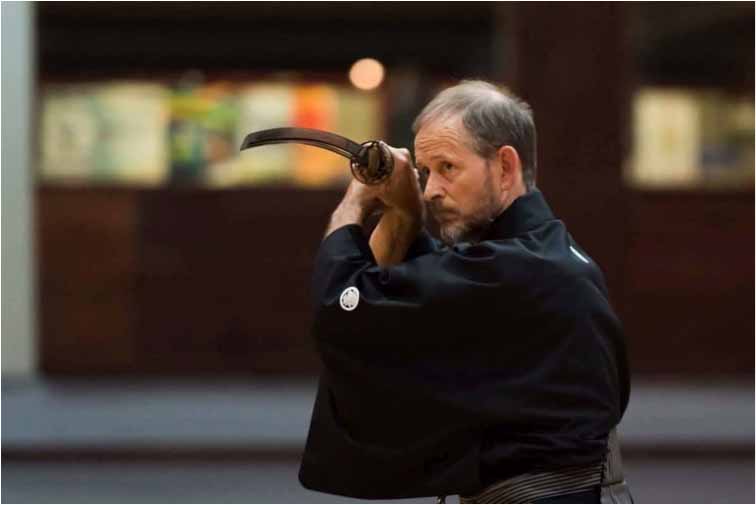
Patrik Demuynck Sensei was born on 24 May 1956 in Heestert, Belgium. His interest in the Japanese sword dates back to when he was eight years old, reading a samurai comic and becoming fascinated by the katana and the menpo.
He began practising karate in the late 1970s. After watching a kendo and iaido demonstration (enbu) in a neighbouring municipality, he turned his focus to iaido and jodo in 1980, which he has practised ever since.
At that time, iaido was largely unknown in Belgium, and dojos were scarce. Together with fellow practitioners, he co-founded a dojo for kendo and iaido, later integrating jodo. To advance their practice, they travelled frequently to the Netherlands to study under Louis Vitalis Sensei and attended international seminars whenever possible. Alongside his personal training, Sensei Demuynck has spent four decades teaching, refereeing, and actively contributing to the Belgian federal martial arts community.
The Tamiya Ryu Path
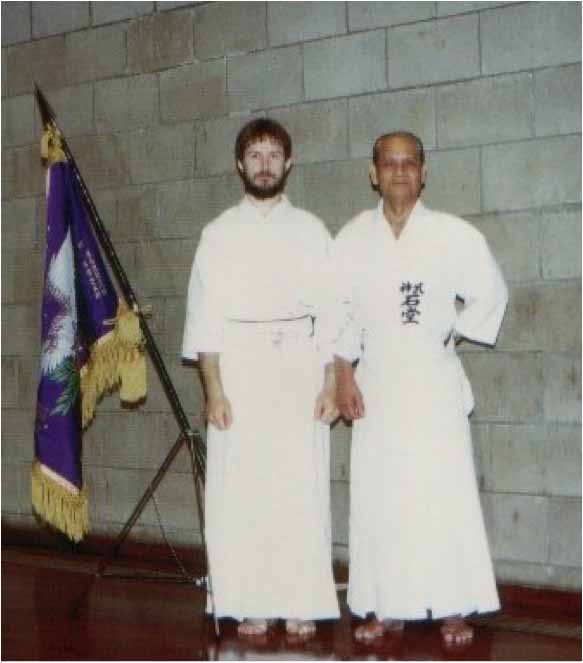
A major turning point came in 1993 at the first European Iaido Championships in Sittard, Netherlands, where he met Yoda Sensei and Machida Sensei—two female Tamiya Ryu instructors. Impressed by their distinctive, refreshing, pure, yet decisive sword style—built on respect, discipline, and self-confidence—he dedicated himself to Tamiya Ryu. To communicate and understand the teachings more deeply, he also began studying the Japanese language in evening and weekend courses.
In 1998, he travelled to Michigan, USA, to study under Soke Tsumaki Seirin, followed by several training trips to Japan in 1999 and 2001.
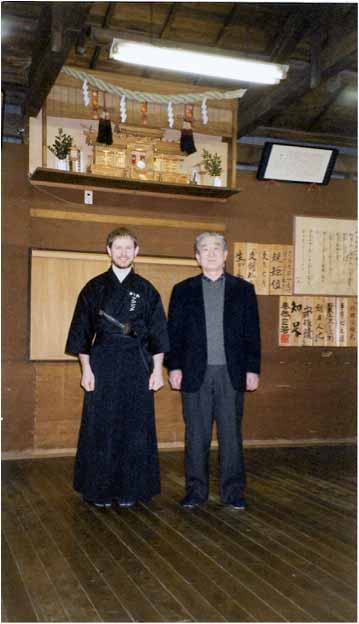
After achieving his 6th Dan in ZNKR Iai in 2000, Yoda Sensei and Machida Sensei introduced him to Fukui Sensei of the Odawara branch of Tamiya Ryu. Fukui Sensei was then the leader of the Kanagawa prefecture organization and a long-time assistant to the Soke. Demuynck Sensei was accepted into the Tamiya Ryu community and formally assigned as a student to Katsumata Sensei, under whose guidance he developed his practice from 2001 onwards.
Katsumata Sensei visited Belgium annually, staying at Demuynck Sensei’s home. Instruction often began at the breakfast table over green tea and continued through dinner, sometimes even requiring furniture to be moved indoors for technique demonstrations. This shared experience fostered a deep bond between teacher and student (monjin).
As Japanese study materials arrived, Demuynck Sensei translated four core Tamiya volumes—Omote no maki, Okugisho, Koran no maki, and Tachi tai—into four English books. Prior to this, no written English materials were available; today, these translations serve Tamiya Ryu students worldwide.

Key milestones in his journey include an extended training period in Hakone with the 82-year-old Fukui Sensei in 2006, studying under Katsumata Sensei at Hakone Jinja in 2009, and participating in the annual Kyoto Taikai.
European Expansion & Current Leadership
As the head of Tamiya Ryu in Europe, Demuynck Sensei oversees the European headquarters in Belgium. Following Katsumata Sensei’s first European teaching trip in 2003, Demuynck Sensei began spreading Odawara Tamiya Ryu across the continent in 2005, starting with France. Today, the school spans thirteen countries/regions:
- Europe & Middle East: Belgium, France, Netherlands, Spain, Hungary, Slovakia, Romania, Greece, Jordan
- Americas & Oceania: Guadeloupe, Canada, Australia
Local groups train in their respective dojos year-round and convene at national seminars.
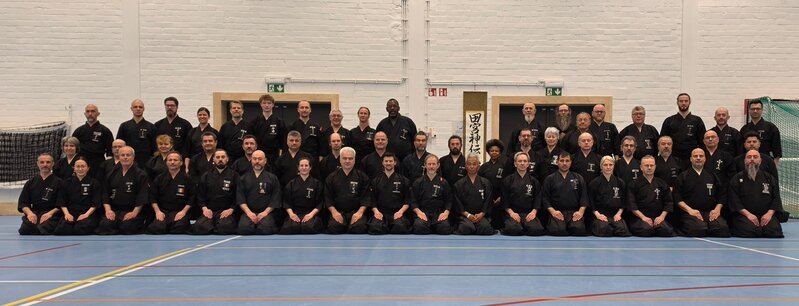
In the summer of 2025, Suzuki Kenji Sensei (Kyoshi 7th Dan, Odawara Tamiya Ryu) succeeded Katsumata Sensei in leading the European Tamiya Ryu community. Over fifty members attended the 2025 Belgian summer seminar to train under him directly. Subsequently, the 2nd International Tamiya Ryu Gasshuku took place in Belgium from 27 to 29 March 2026, led by Suzuki Sensei and assisted by Demuynck Sensei.
Teaching Philosophy
Demuynck Sensei sees no divide between Japanese and Western teaching methodologies, viewing the difference as purely mental: as long as a practitioner learns from a Japanese teacher, they should adopt that mindset and preserve the original style as closely as possible without alteration.
He frequently echoes Fukui Sensei's wisdom:
Iaido is a lifelong practice road. If one stops training, the level will go down.
He strongly emphasizes the traditional principle of bun bu ichi (文武一致)—the seamless unity of theoretical study and physical practice.